Sinus Pressure From Allergies: Causes and What Helps
Allergies swell the nasal lining and block sinus drainage, which causes pressure. Learn why it happens, what helps, and when to see a doctor in NJ.

The short version
- Allergies make the nasal lining swell, which can block the small openings that let the sinuses drain and leave a feeling of pressure.
- Allergic rhinitis affects nearly 1 in 6 Americans, according to a 2015 clinical practice guideline, so sinus pressure with allergies is very common.
- Facial pressure that lasts more than 12 weeks fits the definition of chronic rhinosinusitis and needs a medical evaluation.
- Treating the allergy trigger, not just the pressure, is what usually brings lasting relief.
Sinus pressure is a dull, full feeling in the cheeks, forehead or around the eyes. In people with allergies, it often shows up with sneezing, a stuffy nose and postnasal drip. The cause is usually swelling inside the nose, not an infection.
Why do allergies cause sinus pressure?
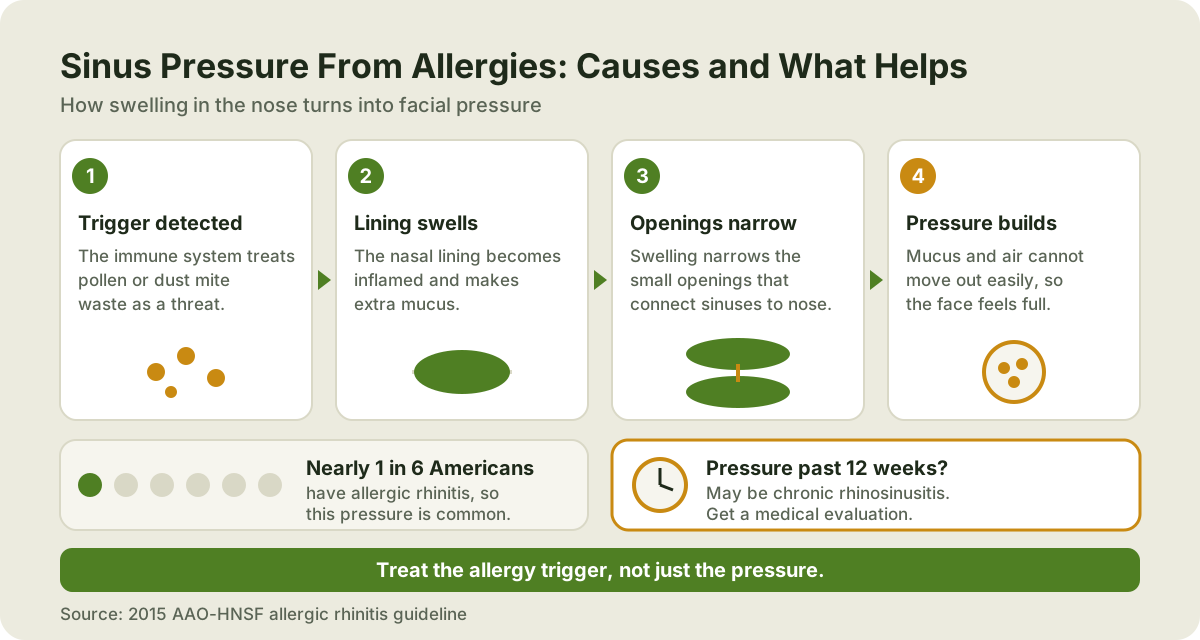
Allergies cause sinus pressure because the lining of the nose swells when it meets a trigger. That swelling can narrow the small openings that connect the sinuses to the nose. Air and mucus then get stuck, and the face feels full or sore.
The process works like this:
- The immune system treats a harmless thing, like pollen or dust mite waste, as a threat.
- The nasal lining becomes inflamed and makes extra mucus.
- The swollen lining narrows the sinus openings.
- Mucus and air cannot move out easily, so pressure builds.
This is very common. A 2015 clinical practice guideline on allergic rhinitis from the American Academy of Otolaryngology-Head and Neck Surgery Foundation estimates it affects nearly 1 in 6 Americans. The guideline also describes it as the most common chronic disease in children in the United States and the fifth most common chronic disease overall.
Is it allergies or a sinus infection?
Allergies tend to bring itching, sneezing and clear, thin mucus. A sinus infection is more likely when pain is strong, fever appears, or symptoms get worse after several days. The two can overlap, and swelling from allergies can set the stage for an infection.
| Clue | More typical of allergies | More typical of a sinus infection |
|---|---|---|
| Itchy eyes, nose or throat | Common | Not typical |
| Sneezing fits | Common | Less common |
| Fever | Not typical | Can occur |
| Pain in one cheek or around one eye | Less common | More likely |
| Timing | Follows exposure to a trigger, and lasts as long as exposure | Often follows a cold, and may worsen after about 10 days |
| Mucus | Usually clear and thin | Often thick, but color alone is not a reliable sign |
A doctor can sort this out. Guessing wrong in either direction wastes time, because the treatments are different.
What helps sinus pressure from allergies?
The most effective approach is to calm the swelling and reduce contact with the trigger. Relief for pressure alone, such as a warm compress, is helpful but short-lived. Treating the allergy itself works on the root cause.
Reduce the trigger
- Shower and change clothes after long spells outside in pollen season.
- Keep windows closed on high-pollen days and run the air conditioner.
- Wash bedding weekly in hot water to cut dust mites.
- Fix damp spots and keep indoor humidity under control to limit mold.
Use medicines that target the swelling
- Steroid nasal sprays act directly on the swollen lining. They work best when used daily, because the effect builds over days. They are widely used for allergic rhinitis, and a 2025 international guideline update (ARIA-EAACI) focuses specifically on intranasal treatments.
- Oral or nasal antihistamines block the itch-and-sneeze chemical, histamine. They help sneezing and runny nose more than deep facial pressure.
- Short-term decongestants can open the nose for a few days. Decongestant nasal sprays should not be used for more than about 3 days, because stopping them can cause the stuffiness to bounce back worse.
A pharmacist or doctor can help choose among these, especially for children, pregnant people, and anyone with high blood pressure or other health conditions.
Add simple comfort steps
- A warm, damp washcloth over the cheeks and nose can ease the ache.
- Steam from a shower can loosen mucus for a short time.
- Drinking water helps keep mucus thinner.
- Saline rinses can wash out pollen and mucus. Safe technique matters, and the FDA advises using distilled, sterile or properly boiled and cooled water. This guide to doing nasal saline rinses safely at home covers the steps.
Why does pressure get worse during certain seasons in New Jersey?
Pressure tends to flare when the trigger in the air matches the trigger a person reacts to. In New Jersey, tree pollen usually arrives in spring, grass pollen in late spring and early summer, and ragweed in late summer into fall. Each person reacts to different ones, so the bad months differ from person to person.
Indoor triggers matter too. Many New Jersey homes, from shore houses to older suburban homes with basements, can stay damp in humid summers. Damp spaces favor mold and dust mites. Winter heating then keeps people indoors with those triggers. If pressure shows up all year, indoor allergens are a strong suspect.
Tracking when symptoms start, and where, is one of the most useful things a person can do. A simple note on a phone with dates, places and symptoms can point to the cause. For a closer look at one specific season, see the article on ragweed season in New Jersey.
When does allergy-related pressure become a longer-term problem?
Facial pressure that lasts more than 12 weeks may be chronic rhinosinusitis, not just seasonal allergies. A 2016 review in the Journal of Allergy and Clinical Immunology: In Practice defines chronic rhinosinusitis with nasal polyps by symptoms lasting longer than 12 weeks. Those symptoms include nasal congestion, runny nose or drip, reduced sense of smell, and facial pressure or pain.
The same review explains that nasal polyps are soft, swollen growths in the nasal airway. They are usually on both sides and typically start in the ethmoid sinus, located between the eyes. The review notes the condition often occurs with asthma and allergic rhinitis. It also says the exact cellular and molecular causes are not fully understood, so the review offers no simple explanation and no single cause.
A 2019 review on asthma, rhinitis and nasal polyps adds a useful idea: the "united airway." The nose and lungs are linked, and problems in one often show up in the other. The review calls allergic rhinitis the most common of these conditions and says chronic rhinosinusitis with nasal polyps is the one most closely tied to severe asthma. Its advice is that the upper airway should always be checked when someone has asthma. Wheezing or a chest that tightens along with nasal symptoms is a good reason to mention both to a doctor.
These reviews describe how the conditions relate. They do not test home remedies, so they cannot say which self-care steps work best.
When should someone see a doctor about sinus pressure?
See a doctor if pressure lasts more than 10 days without improving, returns again and again, or lasts 12 weeks or more. Some signs need urgent care.
Get care the same day or go to the emergency room for:
- Swelling, redness or pain around an eye
- Vision changes or double vision
- A severe headache with a stiff neck
- High fever with confusion
Book a visit soon for:
- Symptoms that last longer than 10 days, or that improve and then suddenly worsen
- Fever with strong facial pain
- Loss of smell that does not return
- Wheezing or chest tightness with nasal symptoms
- Allergy medicines that are not working after a few weeks
An allergist can test for specific triggers. An ear, nose and throat specialist can look inside the nose for polyps or a blocked drainage pathway. Matching treatment to the true cause usually works better than trying product after product. For personal help close to home, browse allergy and sinus doctors in New Jersey who can test for triggers and check for sinus problems.
Common questions
Can allergies cause sinus pressure without an infection?
Yes. Allergies inflame and swell the nasal lining, which can narrow the sinus drainage openings and trap mucus and air. That trapped fluid and swelling creates a feeling of pressure in the face even when no germs are involved. Infection can follow, but pressure alone does not mean infection.
How long does allergy sinus pressure last?
Pressure from allergies usually lasts as long as exposure to the trigger, which could be days or weeks in pollen season. Pressure that continues beyond 12 weeks fits the definition of chronic rhinosinusitis and should be checked by a doctor, since other causes like polyps may be involved.
What is the fastest way to relieve allergy sinus pressure at home?
A warm damp cloth over the face, steam from a shower, and plenty of water can ease discomfort quickly. For lasting relief, the swelling and trigger need attention, such as a daily steroid nasal spray or antihistamine. A pharmacist or doctor can help choose which one fits.
Is it safe to use decongestant nasal spray for sinus pressure?
Decongestant nasal sprays can help for a short time, but they should not be used more than about 3 days. Longer use can cause rebound congestion, where the nose feels more blocked once the spray wears off. People with high blood pressure should ask a doctor or pharmacist before using decongestants.
Sources
- Allergic Rhinitis and Its Impact on Asthma (ARIA)-EAACI Guidelines-2024-2025 Revision: Part I-Guidelines on Intranasal Treatments. Allergy, 2026
- Chronic Rhinosinusitis with Nasal Polyps. The journal of allergy and clinical immunology. In practice, 2016
- Asthma, rhinitis, and nasal polyp multimorbidities. Archivos de bronconeumologia, 2019
- Clinical practice guideline: Allergic rhinitis. Otolaryngology--head and neck surgery, 2015
Trusted resources
From our sister sites
Healthy NosesDry Nose on Airplanes: Why Cabin Air Dries You OutCabin air is very low in humidity, which dries the nasal lining on flights. Learn why it happens, what helps, and when a nosebleed needs a doctor.Coastal SinusHow Long Does a Sinus Infection Last? When to WorryMost sinus infections clear up on their own in 7 to 10 days. Get the full timeline, warning signs of a bacterial infection, and when to call a doctor.Articles are for general information, not medical advice. See a doctor for symptoms that are severe, last more than 10 days, or keep coming back. Last updated November 7, 2026.